WATOTO PRIMARY SCHOOL
Bwindi is a community overwhelmed by poverty, Malaria, HIV/AIDS and desertion. Even in these dire circumstances some parents find a way to pay tuition and care for their children. For those children who have lost their parents or are part of a family that is too large to send the children to school, sponsorships are the lifelines to education.
Watoto Primary School has approximately 240 students and about half of them board. Half are day students who go home to families who care for them.
The school receives no government assistance. It was founded to care for those children who have lost their parents or are from impoverished homes. It has expanded to provide the best quality education in the district. Sponsorships are its economic mainstay.
In 2010, Watoto proudly graduated its first class with honors. It continues to receive some of the best national exam results in the district.
The Boarders receive four meals each day .The children are healthy, happy and learning. Life is so much better for a sponsored child.
BCP partners with Educate Bwindi, a 501c3 formed in 2015, to better serve the primary students. BCP focuses on the Secondary level of education and beyond. Students rarely are able to attend secondary school and BCP is proud to help them.
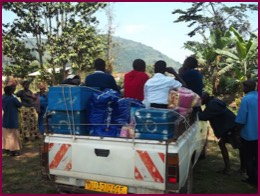
“The lucky graduates of Watoto who are able to attend Bishop Comboni Secondary School
as they leave for their first term away from the village”
